 Rejuveno Worldwide Inc.
|
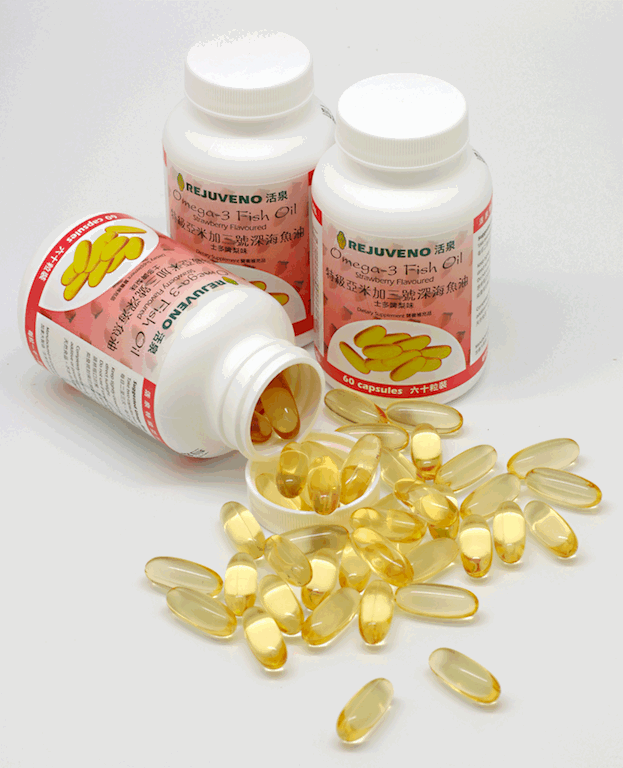
Strawberry-flavoured OMEGA-3 Fish OilLast update: September 17, 2013
It's low in calories, high in protein and packed with vitamins and minerals. But that's not why fish may be the ultimate health food. A special group of compounds in fish oils have proved to be such powerful protectors of the heart that doctors are urging Americans to swap their beloved sirloins for salmon, sardines and other seafood. According to one study, just two fish meals a week can significantly improve blood circulation. The reason: Fish oils, rich in unsaturated fats called omega-3 fatty acids, change the chemistry of the blood. As William Lands, a chemist at the University of Illinois in Chicago, observes: "From a scientific standpoint, fish oils are as exciting as all get out." Researchers began to suspect something fishy when studying Greenland Eskimos and Japanese fishermen, who are generally healthier than those living in Western countries. What those two groups do differently from us is eat fish -- lots of it. The Eskimos average more than three-quarters of a pound a day; the Japanese average more than a quarter of a pound. By comparison, Americans eat only 13 pounds of fish a year. Dutch researchers provided more evidence for the link between fish and healthy hearts in 1985, when they reported on a 20-year survey of the diets of 852 middle-aged men. Those who ate an average of just one ounce of fish a day had half the health problems of men who ate little or no fish. And the more fish the men ate, the less likely they were to die at an early age.
Studies at the National Institutes of Health and at Massachusetts General Hospital showed that a diet rich in omega-3 fatty acids protected mice against kidney disease. These versatile compounds also slowed the development and progression of mammary cancer in rodents studied at Rutgers University in New Jersey. Fish oils may be essential for normal development of the brain and the retina. When Dr. Connor fed pregnant rhesus monkeys and later their offspring a diet low in omega-3 fatty acids, the baby monkeys had abnormal retinas and couldn't see as well as other monkeys. "Omega-3 fatty acids should definitely be part of the diet of pregnant and nursing women." Connor says. "But we don't know how much is enough and how much is too much." The fish diet: What kinds? How much? All fish -- freshwater or saltwater, fatty or lean, fresh or frozen -- provide some benefits. But those that swim in cold ocean waters, such as salmon, mackerel, tuna and sardines, are higher in the wonder-working omega-3 fatty acids. Even crab, shrimp, lobster and other shellfish, long disdained as high in cholesterol, pack plenty of healthful omega-3 fatty acids -- and less cholesterol per serving than a single egg. Product SafetySome deep water fish in polluted areas may be contaminated with harmful heavy metals such as mercury, lead, arsenic, and cadmium, and may contain high levels of PCB's such as the cancer-causing dioxins. In choosing the right kind of health food supplements, safety is an extremely important consideration. Always ask for a report of analysis conducted by an independent lab with ISO9002 certification. The report should show that the amounts of heavy metals, PCB's and dioxins are within safe limits. From July 1, 2002, food and animal feed manufacturers across the European Union must abide by strict new limits on permitted levels of cancer-causing dioxins. The maximum limit for dioxins in fish oil for human consumption is 2.0 pg WHO-PCDD/F-TEQ/g fat.
This Web page and all linked pages are designed and developed by Dr. Gilbert Ng. Email: gng@rejuveno.com Copyright © 2013. All rights reserved. No part of this document may be reproduced
by any means or in any form without permission from the author. |